Deslop D-01, from sketch to software face
How an editing tool got an enclosure, and what using the first one changed.
Deslop began as one job. A model leaves habits in writing: padding, stock phrases, the sentence that announces the next sentence. Deslop takes them out of a draft and leaves the decision about what stays with the person who wrote it.
A tool you keep open all day has to be small, readable at a glance and hard to misread. So the first sketches drew it as a desk unit in red enamel: a display across the top, one large dial for how deep the edit should go, a smaller control for what must not change, a Run key, and two keys on the right edge to take the result or refuse it.
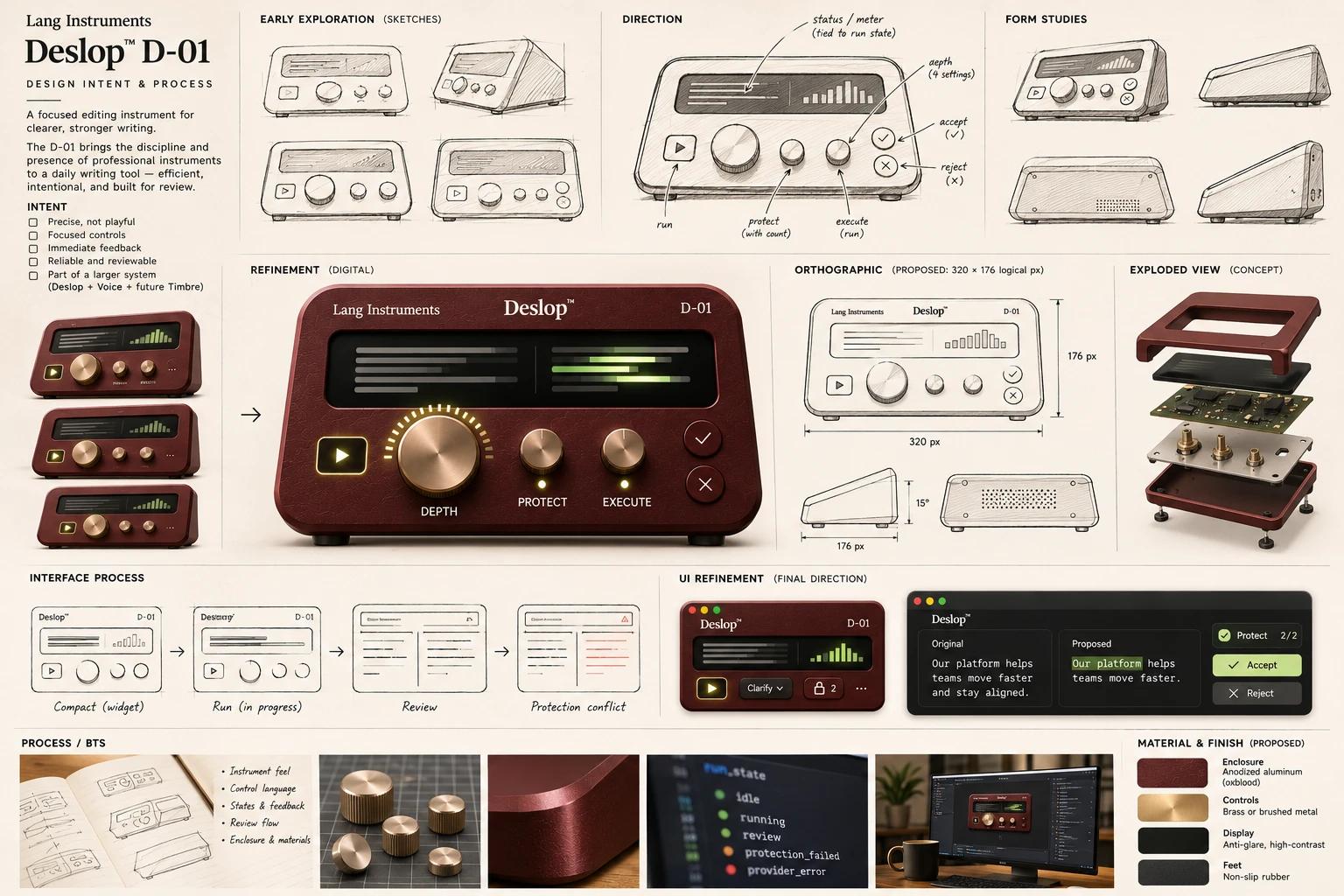
The first window
The drawing became a window 320 by 176 points, and each control on the drawing was given a job in the engine. The dial had four positions. The smaller control held a list of exact phrases. The two keys on the right recorded a decision. That version was built, run and used.
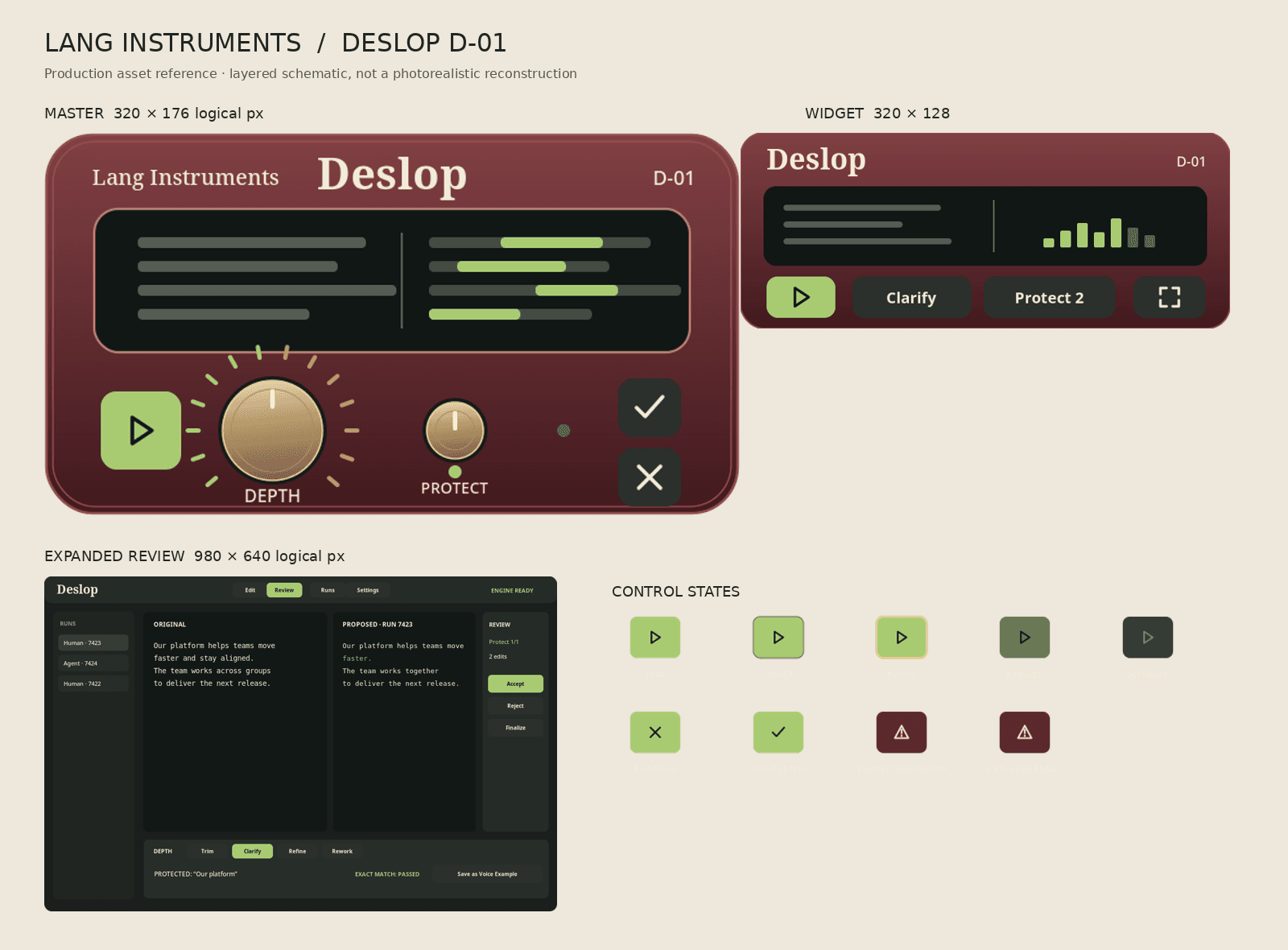
What using it taught
Two controls for one feeling was one too many. Choosing a depth and then choosing what to protect asked the writer to predict the edit before seeing it. The shipping desk has one slider, mix, which you move after the pass while you watch the page change.
Protection moved inside. Numbers, dates and quotations are checked on every pass without being asked. When a check fails the light turns amber and the original comes back untouched.
One panel was doing two jobs. The small window was too small to read a change in, and the large one was too large to leave open. So Deslop became two faces: a meter that stays open, and a desk you open from it.
What didn't make it through
The renders show green bars glowing in the display. They looked right and meant nothing, because no measurement sat behind them. On the meter, every bar is a line of your text, and every red or pink one is a tell the scan found.
The four-position dial went, and so did the phrase list and the two keys. The large dial stayed and got a better job: on the desk it steps through the changes, one at a time.
The red enamel went too. The plate is charcoal now, and the only red on it is a tell.